
System 03
Technology
Modular infrastructure for a body that can evolve for decades.
Engineering candidate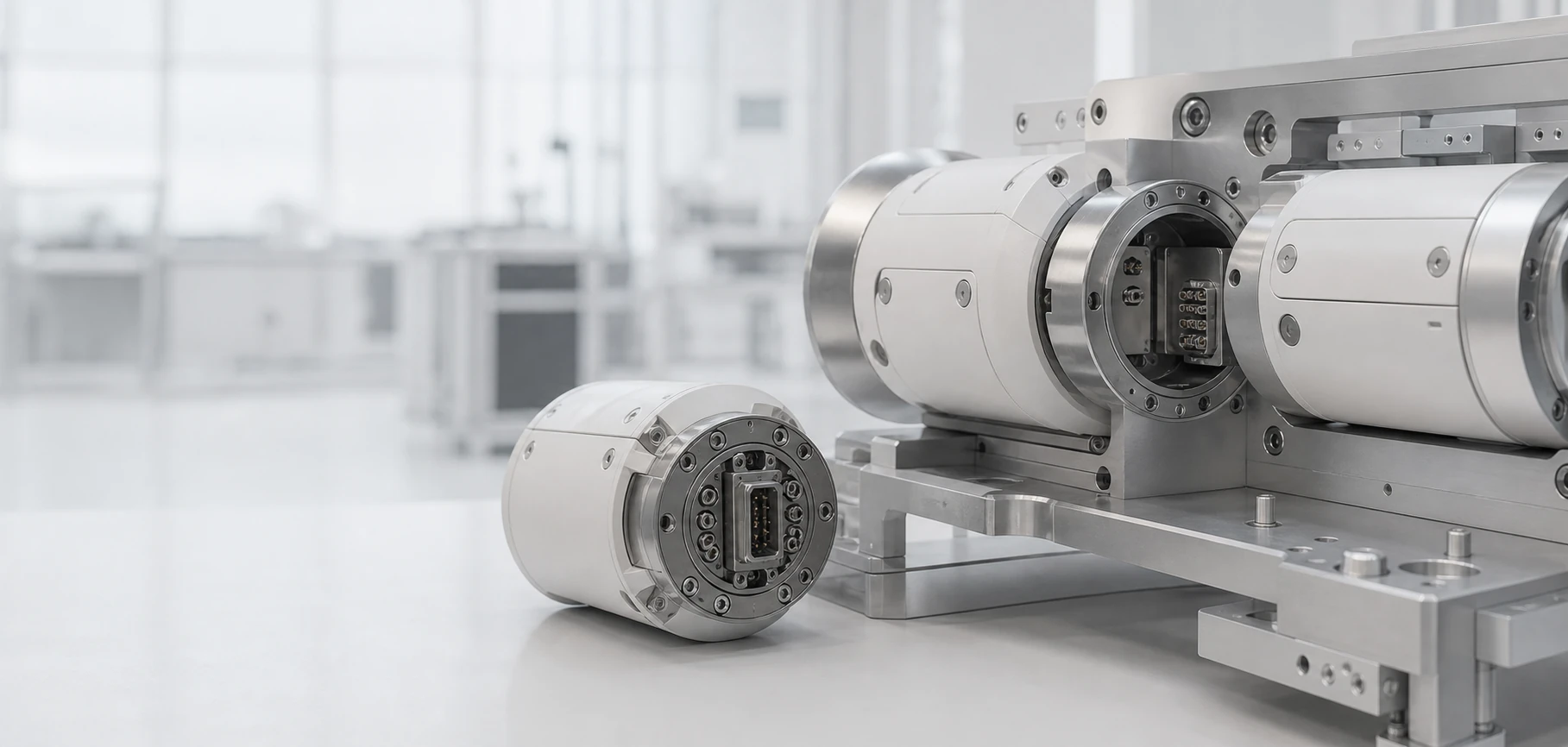
Leeloo Digital / Homo sapiens technologicusSystem 03
01 / Technical scope
No single component should determine the lifetime of the complete organism.
Diagram / Infrastructure architecture
Stable interfaces allow technology to improve without replacing the person
The public model shows responsibilities and replacement boundaries, not component choices or subsystem implementation.
Processors, storage, sensors, radios, batteries, actuators and skin evolve at different rates. The architecture must make each inspectable, replaceable and upgradeable.
Interfaces, access routes and diagnostics are therefore first-order design concerns—not afterthoughts.
02 / Infrastructure systems
Modular
Fast-moving systems can change without replacing the body.
Repairable
Wear is assumed, located and addressed through deliberate access.
Redundant
Critical functions avoid unnecessary single points of failure.
Secure
Identity, control and memory are protected across every interface.
Energy domains
High-current actuation, protected low-voltage electronics, emergency reserves, charging and isolation are separated and monitored.
Transport networks
Thermal transfer, lubrication, pressure functions, cleaning and surface conditioning remain separable according to risk and maintenance needs.
Trust domains
Identity-critical cognition, body control, service access and external communications use distinct security boundaries.
01Power architecture
Energy storage is distributed, isolated and replaceable
The power system must supply sensors and compute continuously while also supporting short periods of high actuator demand. Distributed modules can improve balance, packaging, fault containment and service compared with one monolithic pack.
The architecture separates storage, conversion, high-current distribution, low-voltage buses, charging, emergency reserves and safe isolation. Mechanical packaging remains independent enough to adopt future storage chemistries.
02Thermal and fluid systems
Heat is transported through an organism-wide network
Compute, batteries, power electronics and actuation all create heat. Local collection, pumps, manifolds, bypasses, heat exchangers, surface channels and controlled airflow form a coordinated rejection system.
Cooling, lubrication, hydraulic or pneumatic actuation, cleaning and surface functions do not need to share one fluid. Separation improves containment, fluid compatibility, diagnostics and service isolation.
03Compute and communications
Replaceable computation sits behind stable system contracts
Processors, accelerators, storage, radios and sensor interfaces change faster than the mechanical body. Replaceable compute modules therefore connect through versioned mechanical, power, data, security and cooling contracts.
Internal networks coordinate time-sensitive body functions; external networks support communication and knowledge exchange. Essential movement, perception and safety remain local enough that loss of an external network does not remove bodily autonomy.
04Diagnostics
Condition monitoring is distributed throughout the body
Temperature, vibration, current, resistance, pressure, flow, strain, bearing condition, actuator performance, battery health, connector state and leaks are monitored close to their sources.
Trend analysis compares current behavior with the individual body’s historical baseline. The objective is to schedule intervention before a gradual fault becomes a dangerous or expensive failure.
05Modularity
A module boundary must support replacement, not merely removal
A valid module boundary defines mechanical location, safe isolation, connections, data identity, diagnostics, calibration, software compatibility, removal access and post-installation verification.
Version coexistence matters because a long-lived body cannot replace every subsystem simultaneously. New and old modules need explicit capability negotiation and controlled fallback behavior.